
Transportation Overview in Slovenia
Slovenia offers a well-integrated transportation network that combines modern road infrastructure with an evolving public transit system. For foreign nationals, navigating the country is facilitated by the Integrated Public Passenger Transport (IJPP) system, which allows the use of a single electronic card for different modes of transport across various regions.
Whether you reside in the capital, Ljubljana, or in more rural areas, understanding the distinction between urban, regional, and national transport services is essential for efficient daily commuting.
Public Transport Networks
Public transport in Slovenia primarily consists of buses and trains. The system is designed to connect major urban centers like Maribor, Celje, and Kranj with the capital, though frequency varies depending on the region.
Urban Bus Services
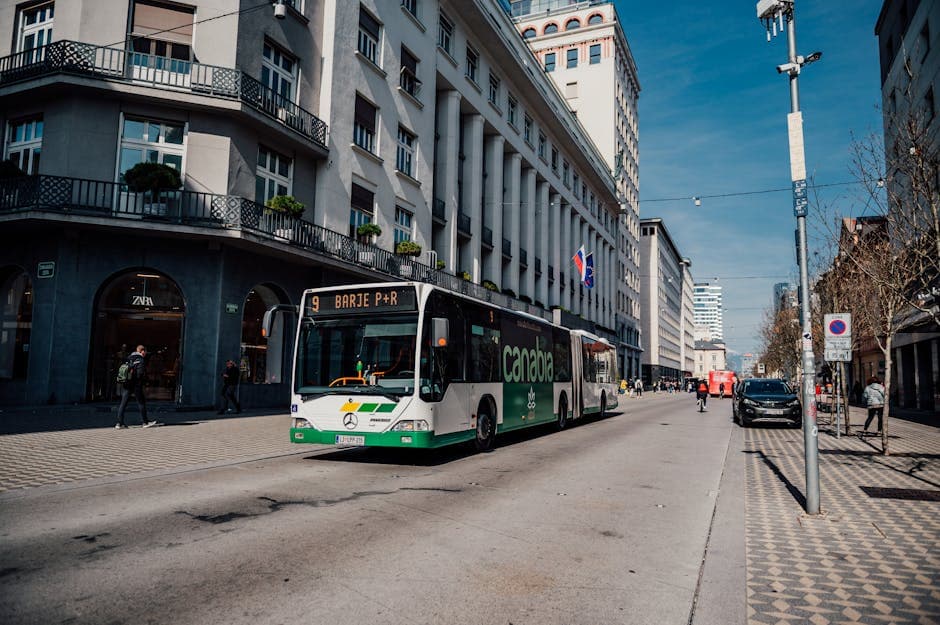
In Ljubljana, the urban bus network is managed by LPP (Ljubljanski potniški promet). Passengers must use the Urbana card, which can be topped up at kiosks (Trafika), post offices, or via mobile apps. A single journey within the city zone costs approximately 1.30 EUR ($1.43 USD, Jan 2026) and includes unlimited transfers within 90 minutes.
- Monthly General Pass: Approximately 37.00 EUR ($40.70 USD, Jan 2026).
- Student Pass: Subsidized rates apply for registered students.
Railway Services
The national rail operator is Slovenske železnice (SŽ). Trains are a reliable way to travel between cities, with international connections to Austria, Italy, Hungary, and Croatia. Tickets can be purchased at station counters, via ticket machines, or on the official mobile application.
IJPP Integrated Card
For those commuting between cities, the IJPP card is the most cost-effective solution. It integrates regional bus services and trains into one ticketing system. You can check schedules and card options on the official IJPP portal.
Driving and Vehicle Regulations
Driving in Slovenia requires strict adherence to national traffic laws and specific document requirements for foreign residents.
Driver's License Requirements
The rules for using a foreign license depend on your country of origin:
- EU/EEA Citizens: You may drive using your valid national license until its expiration. After becoming a resident, you have the option to exchange it for a Slovenian license.
- Non-EU Citizens: Residents from non-EU countries can generally use their national license along with an International Driving Permit (IDP) for up to six months. After 183 days of registered residence, you must exchange your license for a Slovenian one, which usually involves passing a medical exam and, in some cases, a practical driving test.
The E-Vignette (E-vinjeta)
Slovenia uses an electronic vignette system for all motorways and expressways managed by DARS. Physical stickers are no longer used; the vignette is linked to the vehicle's registration number.
Current pricing for Class 2A (Cars):
- Weekly Vignette: 16.00 EUR ($17.60 USD, Jan 2026).
- Monthly Vignette: 32.00 EUR ($35.20 USD, Jan 2026).
- Annual Vignette: 117.50 EUR ($129.25 USD, Jan 2026).
Failure to have a valid e-vignette when entering a motorway results in heavy fines ranging from 300 to 800 EUR.
Mandatory Equipment and Rules
Slovenia enforces specific safety regulations that all drivers must follow:
- Winter Equipment: From November 15 to March 15, vehicles must be equipped with winter tires (minimum tread depth 3mm) or summer tires with snow chains in the boot.
- Lights: Daytime running lights are mandatory at all times.
- Alcohol Limit: The legal limit is 0.5 g/l for general drivers and 0.0 g/l for professional or novice drivers.
Alternative Transport and Cycling
Slovenia, particularly Ljubljana, is highly bicycle-friendly. The Bicikelj bike-sharing system in the capital allows users to rent bikes for very low costs. An annual subscription costs approximately 3.00 EUR ($3.30 USD, Jan 2026), with the first hour of every ride being free.
Regional cycling paths are also well-maintained, connecting various tourist spots and residential suburbs, making cycling a viable alternative for short-to-medium distance commuting.