
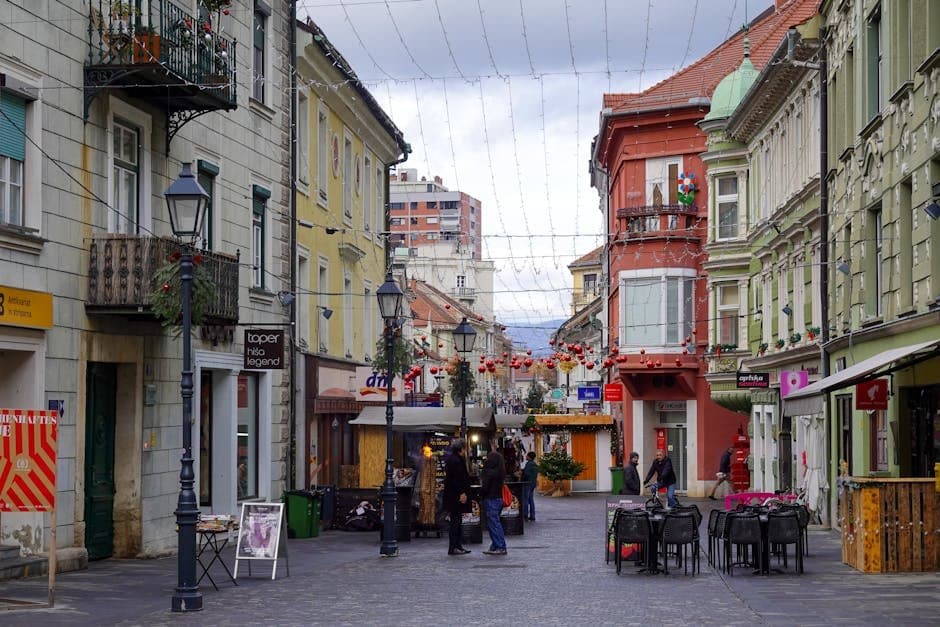
Overview of Celje
Celje is situated at the confluence of the Savinja, Voglajna, and Hudinja rivers. It serves as a critical node in Slovenia's transport network, positioned midway between the capital, Ljubljana, and the second-largest city, Maribor. The city maintains a balance between its medieval historical core and extensive industrial zones that support the regional economy.
Cost of Living and Housing
As of 2025, housing costs in Celje remain significantly lower than in Ljubljana. The average monthly rent for a one-bedroom apartment in the city center is approximately 550 EUR. Outside the center, prices range between 350 EUR and 480 EUR. Utilities, including electricity, heating, water, and waste management for an 85-square-meter apartment, average between 190 EUR and 260 EUR per month.
Current real estate listings and market trends can be monitored through the national portal Nepremicnine.net. Grocery prices and consumer goods are consistent with national averages, though local services and dining are generally more affordable than in coastal or capital regions.
Neighborhood Profiles
- City Center: The historical district featuring pedestrian zones, administrative buildings, and apartments in renovated heritage structures.
- Otok: A residential neighborhood located west of the center, known for its proximity to the City Park and the Savinja river.
- Lava: A densely populated area with high-rise apartment blocks, well-served by primary schools and local retail outlets.
- Hudinja: Situated in the northern part of the city, this area hosts major shopping centers and newer residential developments.
Transportation and Connectivity
Celje is a major stop on the international railway line connecting Graz, Maribor, Ljubljana, and Trieste. The Slovenian Railways (Slovenske železnice) provide frequent daily connections. Local urban transport is managed by the Celebus network, which operates eight routes covering the municipal area.
The city is directly connected to the A1 motorway. Travel time to Ljubljana is approximately 50 minutes, while Maribor is accessible within 35 minutes. For international air travel, Jože Pučnik Airport Ljubljana is located 78 kilometers away.
Employment and Residency
The local economy is anchored by the metallurgical, chemical, and logistics sectors. Major employers include Cinkarna Celje and various manufacturing entities in the eastern industrial zone. For foreign nationals, the right to work depends on individual situations regarding visa types and work permits. EU citizens have free access to the labor market, while non-EU citizens must obtain a Single Residence and Work Permit. Official guidelines are provided by the Employment Service of Slovenia.